As the UK gets back to business, we’re working hard to grow our team and provide an even greater level of support to our partners. Working together we can offer fantastic deals on essential services to help the UK’s small businesses bounce back in style!
We caught up with one of our newest recruits, Partner Sales Manager, Adam Stableford, to give us a little insight into his life and his time so far with Clear Business.
Adam began his career with Crown Energy where he spent nine years across two spells as a member of the sales team.
Having joined us at Clear Business in March 2021, Adam is already a huge asset to our team.
Adam is working closely with Clear Business partners, helping them through the onboarding process, managing relationships and helping each partner to maximise the opportunities they have while they work with us. He’s a key point of contact for many of our partners.
He told us: “I enjoy working with our partners because it’s like having an extended group of colleagues. It sounds a bit cliché to say it, but we’re like one big family working towards a single goal.”
Despite only having been with Clear Business for a few months, Adam is already building lasting relationships with our partners that he plans to develop over the long term.
“I’m looking forward to developing those relationships in the future,” he said. “It’s fantastic to work with such a broad range of different partners across a wide range of products. We work at a really fast pace, and I feel our partners appreciate that.”
When he’s not offering expert advice to partners, Adam is spending time with his six-year-old daughter and his fiancée. He’s also an avid DJ and we already have him booked for our company Christmas party!
We couldn’t let Adam go without first asking his secret to success within the industry: “First of all is the standard of treat others as you wish to be treated in any situation but also be transparent and open with both colleagues and partners.”
We’re so pleased to have Adam on our team and we’re already excited for the value he can add for Clear Business partners.
There has been widespread media coverage recently about rising energy prices and energy suppliers ceasing to trade.
Why are energy prices rising?
Wholesale prices for natural gas and electricity have risen due to higher global demand, reduced generation due to planned maintenance and lower renewable electricity generation due to low winds.
We understand this can be unsettling, particularly for business owners whose livelihood depends on the use of energy. Gas and electricity are critical components in so many of our customers’ businesses, and they rely on the energy industry to keep that supply flowing.
Your supply is safe with us
We want to reassure all Clear Business customers that there is no reason to be concerned about the security of your energy supply.
Clear Business is part of the Verastar Group, which provides a wide range of services including telecoms, broadband, water, insurance and payment services, as well as energy, to over 160,000 small businesses.
The fact that we offer a wide range of services, coupled with the way we purchase energy on the wholesale market, means we are at lower risk than many other energy providers from current fluctuations within the market.
If you’re in a fixed term contract
If you’re in a fixed-rate energy contract your rates won’t increase during your fixed term, save in the limited circumstances set out in your contract.
If your contract’s due to end soon, you’ll lock in the best rates by remaining in a fixed contract. We’ll contact you before your contract ends to offer you a renewal.
If you’re not in a fixed-term contract
If you’re not currently in a fixed-term contract for your gas or electricity prices, the wholesale prices increases will unfortunately affect you and you could end up paying more than you need to.
You can secure the most competitive rates by entering into a fixed-term contract with Clear Business, while protecting yourself against any further wholesale price increases.
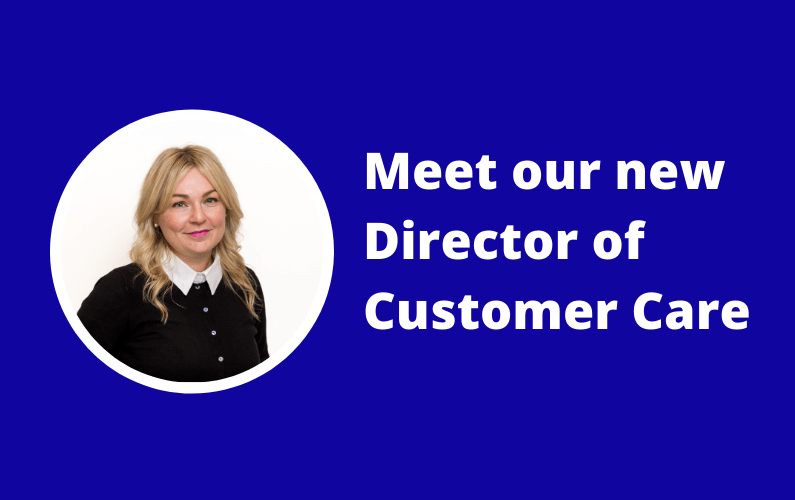
We’d like to introduce our new Director of Customer Care, Stacey Clarke, who joined the Verastar Group, which includes Clear Business in late 2021.
With 15 years’ experience leading customer service teams, Stacey has a fantastic track record of setting new service standards within global brands like Virgin and Experian.
Stacey’s remit is to ensure our customer-facing colleagues are equipped with the right tools and training to deliver outstanding service for every single Clear Business customer.
Simplicity and empathy are at the core of Stacey’s ethos and her approach to customer experience.
She said: “I’m a firm believer in placing the customer at the heart of everything you do, always thinking as a customer and putting yourself in their shoes. We all consume in our everyday lives and it’s important for customer service teams to think ‘is this how I would like to be treated as a consumer?’.
“Only by understanding your customers and what their needs are, can you deliver simple, brilliant service. Delivering the basics well, and consistently, is the foundation of great customer service. Fundamentally, it’s about providing a human-to-human experience.”
Stacey is already having a huge impact across the business, having implemented a number of transformational changes to optimise our customer service delivery with the goal of moving towards 30 second answer-times for customer service calls and improving first-time resolution rates.
Creation of centres of excellence
Under Stacey’s leadership we have launched a new “centre of excellence model” to ensure customers are always directed towards a dedicated department that is best placed to deal with their query first time.
These centres of excellence will focus on upskilling colleagues in their chosen skill set, creating training programmes and escalation procedures to more effectively deal with customer issues first time around.
Centres of excellence:
Technical support
Customer resolution
Telecoms specialists
Utilities specialists
Customer ownership
A new “customer ownership” initiative will ensure colleagues take ownership to resolve issues on behalf of customers, and keep them informed if it takes time to resolve, reducing the need to transfer customers to other departments, or for repeat calls.
24/7 service for telecoms customers
For our telecoms customers we are extending our technical support service to 24/7, so whatever the issue, whatever the time of day or night, we’ll be there.
These changes are in development right now and customers will begin to feel the benefits very soon.
The way broadband and telephone services are delivered to homes and businesses in the UK is currently undergoing a huge change, known as the PSTN and ISDN switch off, and this will affect you and your business.
So, if you aren’t already up to date, now’s the time to start learning about what this all means for your business with our simple guide.
What is the PSTN and ISDN Switch Off?
In 2015, Openreach, which is responsible for the UK’s main broadband and phone networks, announced its decision to switch off the existing Public Switched Telephone Network (PSTN) and Integrated Services Digital Network (ISDN). There’s a lot of words here, but all you need to know is that these are the networks that have delivered our communication services for decades.
These services are out of date and frankly, unfit for the demands of the digital age. Plus, the running and maintenance costs of these creaking legacy networks are increasing at pace. Openreach is set to switch off both networks by 2025.
The old networks are currently being replaced with fibre optic cables that transmit data at light speed directly into your premises. This is referred to, sensibly, as Fibre to the Premises or FTTP. Once installed, FTTP networks deliver both a high-speed broadband connection and internet-based telephone services to residential and business premises.
Now, you may be thinking that you already have a fibre broadband connection, and that’s probably correct, but you’re probably using something called Fibre to the Cabinet (FTTC).
With FTTC, the fibre optic cables run from your local exchange to a green street cabinet near your premises – you’ve probably walked right past one of these in the last week. The big difference is that this cabinet is connected to your premises by a copper cable, which makes the service slower and less reliable.
With FTTP fibre optic cables connect all the way from local exchange directly into your premises, and with not copper cables, your service is faster and more reliable. Most businesses rely on broadband and phone connections to keep things running and keep in contact with customers. This improved connection can help provide a better service and can also be upgraded beyond anything previously available, for faster speeds and to support more devices. So, it’s much better suited to the needs of growing, modern businesses. You can check out the top five reasons that small businesses are making the switch to fibre here.
What About my Old Phone Line?
When the switch off happens in 2025, your traditional landline will no longer work. In addition, you won’t be able to install any new landlines from 2023.
When you make the switch, your phoneline will run via your internet connection using a system called Voice over Internet Protocol (VoIP) or Cloud Voice. Don’t worry about losing your existing business number, you can take this with you, and it’s a simple process that’s managed by your provider.
You can use VoIP via a device that sits within your premises and looks very similar to your current home phone. You can also use an app to take your calls across a range of devices – like mobiles, laptops and tablets – so you’re always connected to your customers via your business phone number.
Futureproof Your Business
In essence, the PSTN and ISDN Switch Off is good for you and your business. The new services guarantee your speed, and provide a quicker and more reliable internet connection, and a more simple and flexible way to make and take phone calls.
So, while the imminent switch to FTTP and a VoIP phones may sound like a hassle, in reality it’s a simple way to future-proof your business, making it faster and more resilient.
Your Essential SME Full Fibre Checklist
To prepare for the upgrade of your broadband to full fibre (FTTP), there are a few steps you can take in advance to maximise your investment and reduce hassle.
With The Big Telecoms Switch Off looming and the rollout of full fibre broadband already well underway, you’ll need to act if you want your business to stay connected.
By 2025, the traditional copper networks that currently enable our communication services will be switched off and the whole network replaced with new “full fibre” technology, also known as Fibre to the Premises (FTTP).
Now, while it may seem a way off, you should consider 2025 as the absolute final deadline to switch. Modern businesses wishing to reap the many benefits of the new technology are acting right now, and there are very good reasons why.
Here are the top five reasons why upgrading to full fibre right now could be of major benefit to your business:
1. Speed and reliability
The headline benefits of FTTP are the boost it offers in terms of speed and reliability.
If your business uses digital services like video conferencing, social media or any cloud-based software such as those commonly used for accounting, payroll, stock management or file storage, then the last thing you need is a slow or patchy internet connection slowing you and your team down.
And then there are devices such as point of sale equipment and card payment terminals which usually rely on a Wi-Fi connection, so when your broadband connection is slow or if it fails, it’s impacting how quickly you can serve customers, and causing you potential embarrassment and loss of business.
Full fibre broadband is designed for the demands of modern businesses that need to stay connected no matter how many devices connect and can handle large files and bandwidth-hungry applications without breaking a sweat.
Fibre cables are also 70-80% more reliable than copper and, because the connection is direct to your premises, you have your own uncontested bandwidth that is not affected by peak usage periods in your neighbourhood. This means that when the café next door is busy, and patrons are having a coffee whilst browsing the internet on the guest Wi-Fi, it doesn’t have a knock-on effect to your internet connection!
Full fibre delivers the fastest connection on the market, with download speeds of up to 1000Mbps and upload speeds of 150Mbps, though most businesses don’t need these speeds. But even a basic FTTP connection offers speeds of 115Mbps, which is faster than even the fastest standard Fibre to the Cabinet (FTTC) connection, with room to upgrade your connection if your needs change.
Fibre has clear business benefits, and you can get this competitive advantage before you’re forced to switch in the next few years.
2. Beat the queue
Many businesses have already switched to FTTP and are enjoying the benefits.
The technology is now becoming mainstream with 6.5 million UK homes and businesses already able to get full fibre, with the aim of reaching 25 million homes and businesses in 2026. ISPreview reviewed Openreach’s progress and their current installation rate is c.47,000 premises per week, while the expected peak rate is c.75,000 per week.
Even at peak rate, which hasn’t been reached, there will be around 21 million premises connected by early 2025 leaving more than 9 million of the UK’s 30.4 million premises to be connected in a rush before the switch off deadline for copper networks!
Importantly, installation requires a visit from an engineer to get your connected, and there are limited number of engineer appointments each day. This means that the longer you wait to upgrade, the more likely you are to end up in a queue for an engineer appointment.
But you can take control of the situation and minimise disruption by speaking to your service provider now about switching to FTTP and request an engineer appointment at a time that’s more convenient to you.
We recommend taking the opportunity to upgrade now so you can request an appointment at a time which is least disruptive to your business, whilst demand for engineer appointments is steady.
3. Productivity
There’s nothing worse for your business than wasted hours and low productivity, and it’s even more annoying if you’re paying employees to wait for pages to load, emails with large attachments to send, or software updates to install because of a slow or low bandwidth connection.
Imagine if you could reduce or remove that wasted time, and the boost your business would get, in terms of time back, over the next three years and beyond.
If you employ a team of people in your business, their time is your money, so it makes no sense to waste it. Even when you’re running multiple applications across multiple devices, FTTP can take the strain with no loss of performance.
If your business is slowed down by broadband that can’t cope, there’s no point waiting until 2025 to upgrade to fibre, when you can reap the productivity benefits now.
4. Upgrade your phone line and get your landline calls from anywhere
When the copper phone lines are switched off, your phoneline will run via your internet connection using a system called Voice over Internet Protocol (VoIP) or Cloud Voice. You have to make this switch, either now or at some point in the next three years.
The great news is that you will use Cloud Voice via a device that sits within your premises and looks very similar to your current home phone. Plus, you can also make and take calls from your landline number via a simple app that works across a range of other devices – like your mobile phone, laptop or tablet. This means you’ll always be connected to your customers via your business phone number, wherever you are, and you’ll never again lose out on trade because you missed an important call when you were out and about.
Of course, if you don’t want to hear from customers during your downtime you can always mute calls from the application!
Cloud Voice also offers a host of other benefits over traditional phone lines that you can read about here. And of course, we’ll make sure that you keep your business phone number when you transfer over.
5. Futureproof your business
We’re all using more and more digital services, both in our personal lives and in our businesses. The pandemic only accelerated this trend, with a huge uplift in use of video conferencing, cloud apps, and ecommerce services, predominantly driven by more remote and flexible working.
The beauty of FTTP is that whatever tools or applications you might want to use within your business, connectivity and bandwidth will never be an issue. As our digital world develops, the applications created today are being built with the new high-bandwidth infrastructure in mind, so you might find that the tools you want to use next year or the year after struggle to run efficiently on an older connection.
Prepare your business for tomorrow, today! Get access to the cutting-edge connectivity your business deserves and ensure you’re ready for whatever the future holds.
Ready to talk to one of our team about upgrading your broadband to full fibre?
Have questions, or simply want a quote?
Call our team now on 0330 165 6213, or complete the form to request a callback.
With The Big Telecoms Switch Off looming and the rollout of full fibre broadband already well underway, you’ll need to act if you want your business to stay connected.
By 2025, the traditional copper networks that currently enable our communication services will be switched off and the whole network replaced with new “full fibre” technology, also known as Fibre to the Premises (FTTP).
Now, while it may seem a way off, you should consider 2025 as the absolute final deadline to switch. Modern businesses wishing to reap the many benefits of the new technology are acting right now, and there are very good reasons why.
Here are the top five reasons why upgrading to full fibre right now could be of major benefit to your business:
1. Speed and reliability
The headline benefits of FTTP are the boost it offers in terms of speed and reliability.
If your business uses digital services like video conferencing, social media or any cloud-based software such as those commonly used for accounting, payroll, stock management or file storage, then the last thing you need is a slow or patchy internet connection slowing you and your team down.
And then there are devices such as point of sale equipment and card payment terminals which usually rely on a Wi-Fi connection, so when your broadband connection is slow or if it fails, it’s impacting how quickly you can serve customers, and causing you potential embarrassment and loss of business.
Full fibre broadband is designed for the demands of modern businesses that need to stay connected no matter how many devices connect and can handle large files and bandwidth-hungry applications without breaking a sweat.
Fibre cables are also 70-80% more reliable than copper and, because the connection is direct to your premises, you have your own uncontested bandwidth that is not affected by peak usage periods in your neighbourhood. This means that when the café next door is busy, and patrons are having a coffee whilst browsing the internet on the guest Wi-Fi, it doesn’t have a knock-on effect to your internet connection!
Full fibre delivers the fastest connection on the market, with download speeds of up to 1000Mbps and upload speeds of 150Mbps, though most businesses don’t need these speeds. But even a basic FTTP connection offers speeds of 115Mbps, which is faster than even the fastest standard Fibre to the Cabinet (FTTC) connection, with room to upgrade your connection if your needs change.
Fibre has clear business benefits, and you can get this competitive advantage before you’re forced to switch in the next few years.
2. Beat the queue
Many businesses have already switched to FTTP and are enjoying the benefits.
The technology is now becoming mainstream with 6.5 million UK homes and businesses already able to get full fibre, with the aim of reaching 25 million homes and businesses in 2026. ISPreview reviewed Openreach’s progress and their current installation rate is c.47,000 premises per week, while the expected peak rate is c.75,000 per week.
Even at peak rate, which hasn’t been reached, there will be around 21 million premises connected by early 2025 leaving more than 9 million of the UK’s 30.4 million premises to be connected in a rush before the switch off deadline for copper networks!
Importantly, installation requires a visit from an engineer to get your connected, and there are limited number of engineer appointments each day. This means that the longer you wait to upgrade, the more likely you are to end up in a queue for an engineer appointment.
But you can take control of the situation and minimise disruption by speaking to your service provider now about switching to FTTP and request an engineer appointment at a time that’s more convenient to you.
We recommend taking the opportunity to upgrade now so you can request an appointment at a time which is least disruptive to your business, whilst demand for engineer appointments is steady.
3. Productivity
There’s nothing worse for your business than wasted hours and low productivity, and it’s even more annoying if you’re paying employees to wait for pages to load, emails with large attachments to send, or software updates to install because of a slow or low bandwidth connection.
Imagine if you could reduce or remove that wasted time, and the boost your business would get, in terms of time back, over the next three years and beyond.
If you employ a team of people in your business, their time is your money, so it makes no sense to waste it. Even when you’re running multiple applications across multiple devices, FTTP can take the strain with no loss of performance.
If your business is slowed down by broadband that can’t cope, there’s no point waiting until 2025 to upgrade to fibre, when you can reap the productivity benefits now.
4. Upgrade your phone line and get your landline calls from anywhere
When the copper phone lines are switched off, your phoneline will run via your internet connection using a system called Voice over Internet Protocol (VoIP) or Cloud Voice. You have to make this switch, either now or at some point in the next three years.
The great news is that you will use Cloud Voice via a device that sits within your premises and looks very similar to your current home phone. Plus, you can also make and take calls from your landline number via a simple app that works across a range of other devices – like your mobile phone, laptop or tablet. This means you’ll always be connected to your customers via your business phone number, wherever you are, and you’ll never again lose out on trade because you missed an important call when you were out and about.
Of course, if you don’t want to hear from customers during your downtime you can always mute calls from the application!
Cloud Voice also offers a host of other benefits over traditional phone lines that you can read about here. And of course, we’ll make sure that you keep your business phone number when you transfer over.
5. Futureproof your business
We’re all using more and more digital services, both in our personal lives and in our businesses. The pandemic only accelerated this trend, with a huge uplift in use of video conferencing, cloud apps, and ecommerce services, predominantly driven by more remote and flexible working.
The beauty of FTTP is that whatever tools or applications you might want to use within your business, connectivity and bandwidth will never be an issue. As our digital world develops, the applications created today are being built with the new high-bandwidth infrastructure in mind, so you might find that the tools you want to use next year or the year after struggle to run efficiently on an older connection.
Prepare your business for tomorrow, today! Get access to the cutting-edge connectivity your business deserves and ensure you’re ready for whatever the future holds.